

The Valley Floor is one of the most distinctive parts of the Box Moor Trust estate, stretching from Two Waters to Bourne End alongside the River Bulbourne and the Grand Union Canal. Today it is a patchwork of grazing fields, crossed by the railway and A41. The Trust also owns 27 residential properties along London Road, which provide valuable rental income. Historically, the area supported thriving watercress beds and the cultivation of cricket bat willows, both important parts of the valley’s heritage.
Two Waters Moor East was separated from the main moor when Two Waters Road was widened. Now unsuited to grazing, it is a popular space for dog walkers.
Across the road, Two Waters Moor West, Bulbourne Meadow, Bulbourne Moor and Hardings Moor form a network of riverside grazing fields. These meadows have hosted community events, including the Trust’s Music on the Moor festival, and were part of the major Bulbourne river restoration project in 2017.
Station Moor is known for its horse chestnut avenue, planted in 1902 to celebrate the coronation of King Edward VII, and its bridge crossing, originally built in 1906.

Fishery Moor is a designated Heritage Site and one of the area’s last remaining flood meadows. Seasonal flooding supports a rich variety of plants and reflects its history as a centre for watercress growing.
Chaulden Meadow is home to Hemel Hempstead (Camelot) Rugby Union Football Club.
South of the A41 lie Herdsman’s, Snoxall’s and Snook’s Moors. Snook’s Moor is linked to the highwayman James (Robert) Snook, who was hanged nearby in 1802—the last highwayman executed in the UK. His memorial stone still stands on the moor today.
Beyond the A41 are Amen Corner, Bourne End Field and the Memorial Orchard, which contains traditional fruit tree varieties.
Closer to the town, Trust land is managed largely for recreation and community use. Heath Park and Balderson’s Moor support local cricket, while Plough Gardens, land beside St John’s Church, and Blackbirds Moor provide valued green spaces. Blackbirds Moor has hosted organised cricket since 1857 and features an avenue of horse chestnuts planted for Queen Victoria’s Diamond Jubilee in 1897.
Finally, Boxmoor Wharf has evolved from a busy trading and bottling site into one of the Trust’s most important commercial assets, generating significant income that helps support the wider estate.
 The Box Moor Trust bought Shothanger (or Sheethanger) Common, Dew Green and Roughdown Common in 1886 for £100. Today, these areas are some of the estate’s most important places for wildlife, history and outdoor recreation.
Shothanger Common is over 30 acres of flower-rich chalk grassland, with cowslips, orchids and other wildflowers appearing each spring and summer. It was also home to Boxmoor Golf Club from 1890 until 2011. Nearby, Bury Wood combines ancient woodland with more recent tree planting.
Howe’s Retreat is now the Trust’s winter home for its Belted Galloway cattle. Over the years it has been a leisure attraction, a wartime camp and a farm. Next door, Dew Green includes a dew pond created by the Trust in 1994.
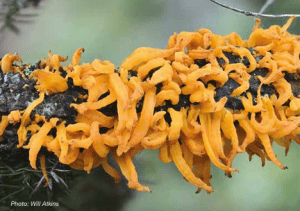
Roughdown Common is a Site of Special Scientific Interest (SSSI), recognised for its nationally important chalk grassland and the county’s only regenerating juniper colony. The common supports a rich variety of wildflowers, including several orchid species and autumn gentian.
Lower Roughdown is known for its chalk slopes and juniper stands, while a bat cave was created in former chalk workings in 1994. The area is carefully managed with Natural England to restore and maintain its chalk grassland habitat. Separated by the A41, Upper Roughdown has developed into a quiet woodland with open glades that encourage woodland plants and wildlife.
Further Roughdown, acquired as compensation land during construction of the A41, has been restored as chalk downland and now supports species such as cowslips, yellow rattle and salad burnet, continuing the Trust’s work to conserve these rare habitats.
 The estate also includes four woodlands – Ramacre, Gorsefield, Green Croft and Hay Wood – which offer a mix of mature woodland, peaceful walking routes and important habitats for wildlife. Among the most impressive sights is the giant Wellingtonia (Giant Sequoia) standing near Westbrook Hay School. At around 140 feet tall and believed to have been planted in the 1850s, it is one of the most recognisable trees on the estate.
Bovingdon Brickworks is one of the Box Moor Trust’s most fascinating nature reserves. Once a working clay quarry, the 40-acre site was acquired by the Trust in 2000 and has since been transformed into a rich mosaic of grassland, woodland and scrub. Its distinctive landscape of slopes, hollows and water-filled pits, shaped by decades of clay extraction, now provides a wide range of habitats where wildlife can flourish.
Today, the reserve is home to an impressive variety of plants and animals. Wildflower-rich grasslands attract butterflies, bees and other pollinators, while ponds provide important habitat for amphibians and aquatic life. Woodland and scrub offer food and shelter for birds, mammals and countless invertebrates, making the site a rewarding place to explore throughout the seasons.
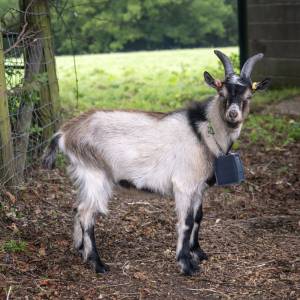
A key part of the Trust’s management approach is conservation grazing. The reserve’s scrub is managed largely by the Trust’s herd of Old English goats, whose natural browsing helps prevent vegetation from becoming too dominant. As they move through the site, the goats create a patchwork of open and sheltered areas, encouraging greater diversity in plants and wildlife while helping to maintain the reserve’s unique character.
What was once an industrial landscape is now a thriving haven for nature and a wonderful place for people to enjoy the outdoors. Bovingdon Brickworks is a powerful example of how former working land can be given a new purpose, supporting wildlife, protecting biodiversity and providing opportunities for visitors to connect with the natural world.

For many years, both before and after the Trust acquired the site, Pixies Mere was operated as a licensed coarse fishery by local angling organisations. During that time, wider community access to the lake and its surrounding habitats was limited. Since May 2026, the Trust has resumed direct management of Pixies Mere with the aim of creating a thriving nature reserve that supports wildlife, allows for sustainable angling in the future and offers more opportunities for local people to connect with this beautiful waterside setting.
Like many natural sites, Pixies Mere has changed over time. Scrub and woodland have gradually grown around the water’s edge, creating valuable wet woodland habitat but also reducing some of the open water and marginal planting that once made the Mere especially diverse. The Trust’s future management will focus on restoring a healthy balance of habitats through careful habitat restoration, improved water-edge management, enhanced aquatic planting and practical measures to increase biodiversity across the site.
The Trust’s long-term vision is for Pixies Mere to become a welcoming local nature reserve where wildlife can flourish and people can enjoy, learn about and feel connected to the natural environment. Because Pixies Mere is an open water site, it will not be open access; instead, any opportunities for the public to visit or take part will need to be carefully managed to keep people safe and protect the habitats that make the Mere special. With careful restoration and sensitive public access, Pixies Mere has the potential to become an outstanding wetland site for the Bulbourne Valley, bringing lasting benefits for nature, wellbeing and the local community for generations to come.
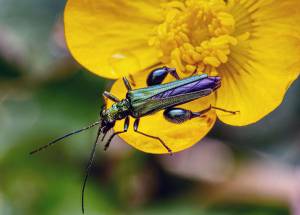 Hidden away beside the Grand Union Canal, Gadespring Nature Reserve is one of the most unique and important wildlife sites cared for by the Box Moor Trust. Acquired in 2011, this four-acre former watercress farm still holds many reminders of its past, including the network of cress beds, historic artesian well infrastructure and the remains of the old processing shed. What was once a productive commercial site is now evolving into a thriving wetland habitat for wildlife.
Our vision is to enhance the former cress beds as a thriving wetland nature reserve, helping to restore and expand one of Hertfordshire’s rarest habitats. Through careful management, we are improving habitat diversity, maintaining spring-fed wetlands, encouraging rare wetland plants and creating stronger connections between the cress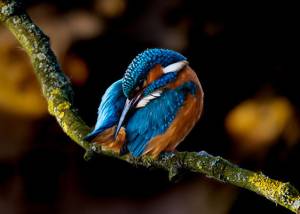 beds, surrounding land and the River Bulbourne. This work contributes to the Trust’s wider ambition to support nature recovery and improve the varied habitats across the estate.
Due to the sensitive nature of the site and the wildlife it supports, Gadespring Nature Reserve is not open for unrestricted public access. However, throughout the year we host guided open days and volunteer-led events, offering visitors the opportunity to explore this special place and see first-hand how a former watercress farm is being transformed into a haven for wildlife.